Other features |
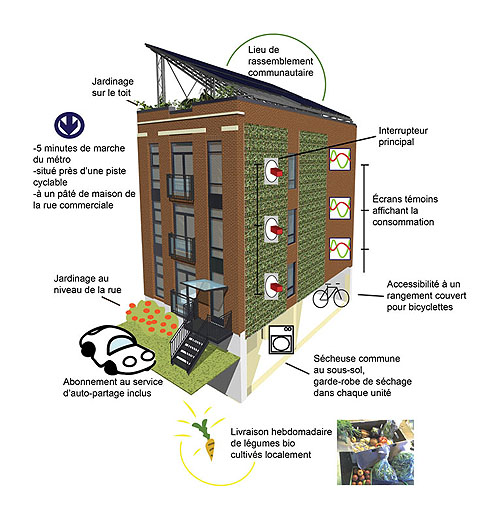
- An agreement has been reached with Hydro-Québec to inject the surplus power generated by the (PV) solar panels into the grid in summer and draw it out in winter, when consumption exceeds the project’s alternative energy capacity. Over a one-year period, the electricity cost is nil.
- Construction of the building was guided by the fundamental principles of the health and comfort of the occupants, energy efficiency, renewal energy production, resource conservation and the reduction of environmental impacts.
- Healthy materials and sustainable, ecologically certified technologies were chosen to minimize the project’s ecological footprint. They were sourced from Quebec manufacturers and obtained from local suppliers whenever possible. In addition, VOC-free materials were used for the interior finishes.
- A main switch at the exit of each unit is connected to the electrical outlets so that power can be switched off when leaving the unit. This eliminates the phantom loads generated by some electronic devices when plugged in but turned off, which account for a fair amount of electricity use in a conventional residence.
- Each unit has a naturally ventilated drying cabinet, and a communal high-efficiency dryer is installed in the basement.
- To re-green the urban area and purify the ambient air, a wall of plant material, vines over the pergola structure and a common planted backyard will enhance the premises and replace one-quarter of the existing paved area on the site. The wall of plant materials on the side of the building in front of the fresh air intake for the units will filter and temper the fresh air supply.
- By providing each owner with easy-access bicycle storage and partnering with a local farm that supplies organic vegetables, the objective is to encourage people to adopt a lifestyle that is more harmonious with the environment.
- To build on the local approach and eliminate much of the CO2 produced by transportation, the building’s geographical location promotes travel on foot, bicycle as well as public transit, as there is a metro station nearby. The condominium owners will be invited to register with a car-sharing service.
|
 |



