Products & Materials |
   |
| PHOTO at right: Stéphane Brügger |
The following materials contribute to the building’s lifecycle sustainability:
- Open grid ceiling along the perimeter of the building enables the slabs to radiate both up and down.
- Low R-value carpeting does not interfere with performance of the radiant slabs.
- The paints, varnishes, sealants and glues used on the work site emit little or no VOCs.
Building materials with recycled content include:
- Steel structure;
- Cast concrete elements (partial replacement of cement by fly ash);
- Recycled content gypsum panels and suspended ceiling tiles;
- 100% recycled material carpet backing.
Regional products include:
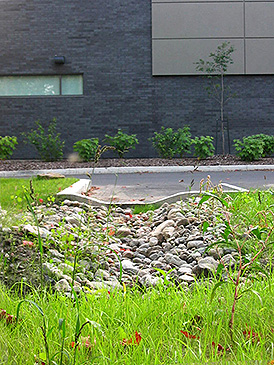
- River pebbles used in the outdoor design;
- cast concrete;
- limestone;
- concrete blocks;
- gypsum panels;
- locally manufactured prefabricated concrete panels.
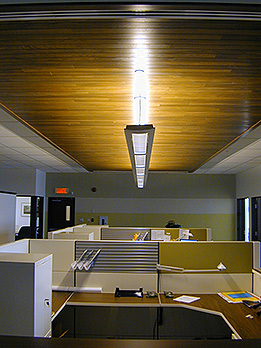
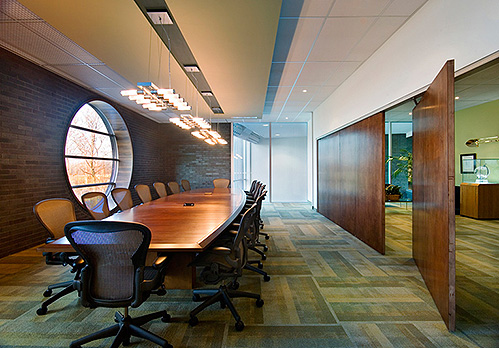
Mature trees felled in preconstruction work – including maples, oaks, lindens and ash – were recovered, dried, cut into planks and turned into soffits, wall panels, furniture components and interior decoration. |
Water Conservation |
  |
Outside:
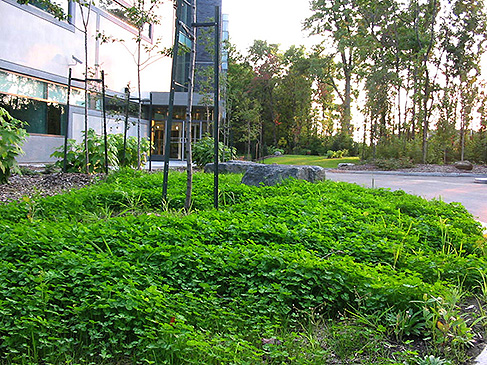
- Much of the original vegetation was conserved, and all landscaping was based on indigenous plants that can resist dry spells, eliminating the need for a automated irrigation system.
- During construction, shallow ditches were dug at the perimeter of the construction zone. These ditches gathered potentially contaminated runoff water and moved it by gravity to a sedimentation pit. Some sediment was filtered by rock fill before entering the pit, and the rest accumulated at the bottom of the pit through a bi-level system of drains. Clean surface water was returned to the water table through the stream.
- A variation on this system is part of the final water conservation strategy: the paved surfaces of parking areas and traffic lanes drain toward the ditches at the perimeter. Overall, this practice ensures that the water table is fed almost to the pre-development level, and it reduces loading of the storm sewer infrastructure.
Inside:
- Controlled-flow faucets, double-flush toilets with infrared detectors, and dry urinals reduce water consumption.
|


