OVERVIEW

ENERGY EFFICIENCY

OTHER SUSTAINABILITY FEATURES & MEASURES

DRAWINGS

MORE CASE STUDIES

ABOUT THE 2030 CHALLENGE


Building Type:
Industrial

Owner:
The Stageline Group

Location:
L'Assomption, Quebec

Budget: $5,100,000

Completion: January 2009

PROJECT TEAM

Architect:

Allard, Hamelin Lalonde, Consortium d'architectes:

Claude Hamelin Lalonde
Luc M. Allard
Jean-François Charbonneau
Pierre Durand
Christian Masse

LEED Accredited Professional:

Luc M. Allard, Architecte:

Jean-François Charbonneau

Structure:

Murox, a division of Canam:

Martin Couture

Mechanical - Electrical:

MuroxEnergy, a division of Canam:

Dany Baillargeon
Jean-Philippe Monfet
Michel Pettigrew

 
Breton, Banville et Associés S.E.N.C.:

Christophe Desage
Louis-François Gagnon
Marie-Josée Audet

Civil Engineering:

Aubé, Gareau Ingénieurs Conseils:

Jean-Marie Audet

Lighting Consultant:

NRG Management Inc.:

Allain Durette

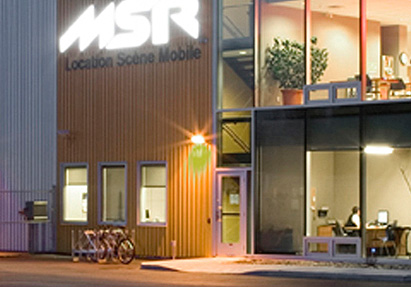
The Stageline Group Building

Allard, Hamelin Lalonde, Consortium d'architectes

OTHER SUSTAINABILITY FEATURES & MEASURES


Products & Materials

The materials used in this building were chosen to minimize environmental impacts. Here are some of the choices made for this project:

  • Steel structure, with a high proportion of recycled steel. Due mostly to this, the post-industrial and post-consumer content of the building is almost 26%;
  • Using the MuroxEnergy prefabricated building system reduced the waste generated onsite;
  • Most materials were sourced locally. The suppliers are within a radius of 800 km.

Interior finishes are low VOC and in keeping with the ecological objectives:

  • Ceramic finishes for the lobby and reception area on the first floor;
  • Linoleum in the second-floor service areas;
  • Modular carpeting in the meeting rooms and offices;
  • The central staircase from the lobby is solid birch over a steel structure, with tempered glass set into the balustrade;
  • Sico Ecosource paint, which contains almost no VOCs;
  • Carpeting compliant with the Green Label requirements of the Carpet and Rug Institute;
  • Walls are clad with white steel to diffuse light.

Water Conservation

PHOTO: Marc Cramer

Landscaping of the site takes into account water conservation. No permanent sprinkler system will be installed; instead, plants and other ground-cover used in landscaping will be chosen for their compatibility with the surrounding land and prevailing climate conditions and preference will be given to indigenous plant species.

A rainwater collection system collects water from the roof (drained area 1,305 m2) and stores it in a 6.8-m3 internal concrete reservoir. This water is used for non-essential purposes, such as washing the mobile stages and watering the company’s community garden.


Other Features & Measures

PHOTO: Marc Cramer
  • During construction, a number of measures were taken to preserve the site. The spread of sediments into adjacent streams was minimized by limiting the work area and controlling erosion.
  • The site is served by a mass transit system. Additionally, the construction of a commuter train station is planned in the near future.
  • Parking spaces have been set aside for car-pooling. Bike stands and shower and change rooms promote bicycle commuting.
  • The building design is based on a prefabricated envelope system, resulting in very little construction site waste and better management of post-industrial manufacturing waste.
  • Spaces are set aside within the building for the recycling of waste (steel scrap, cardboard, paper, plastic, glass and aluminium cans).
  • The building’s systems do not require the use of combustibles and therefore not emit greenhouse gases. The building is one of the first industrial structures in North America to reach that objective.